Getting paid should feel good, so why does payday sometimes feel like sitting down to figure out which problem gets handled first?
I used to open my banking app with this weird mix of relief and dread. Relief that the paycheck finally hit. Dread because I already knew where most of it was going before I even touched it. Hydro. Groceries. Gas. The insurance payment. Hockey registration sitting in my reminders. The prescription that somehow cost more again.
I spent years trying to “be better” with money while quietly feeling stressed all the time. Not dramatic, rock-bottom stressed. More like leaving things sitting in online carts for days hoping I’d talk myself out of buying them, buying the cheap bras because the better ones felt irresponsible, and cutting my own hair in the bathroom (thanks Brad Mondo) because spending $150 at a salon felt impossible to justify. I’d go to restaurants already planning to order water and skip appetizers before I even sat down because I was mentally calculating the total the entire time.
After a while, it starts affecting the way you think about everything.
You stop seeing purchases as purchases. Everything becomes something else instead.
Dinner out becomes hockey skates.
New boots become groceries.
A haircut becomes guilt.
And eventually you start feeling like every dollar in your account already belongs somewhere before you’ve even spent it.
That was the part I couldn’t figure out for years. I thought I was bad at budgeting. Turns out, I just couldn’t tell what money was actually safe to spend.
That’s why I created the Money Lane System. Not for people who enjoy spreadsheets or want to track every transaction. I built it for people like you and me who are tired of trying to hold their entire financial life together mentally.
The entire point of the Money Lane setup is separating your money clearly enough that you finally know:
- what’s already spoken for,
- what’s safe to use,
- and what’s helping your future instead of quietly disappearing every month.
Because when all your money lives in one account, the balance starts feeling vague.
Part of your brain is always trying to remember what hasn’t cleared yet, what bill is coming out tomorrow, and whether the number you’re looking at is actually available or already mentally assigned somewhere else.
I used to check my account before grocery shopping and immediately start subtracting things in my head. The internet bill. The car payment. The field trip money sitting on the counter. The birthday gift I still needed that weekend.
Even when there technically was enough money, it never felt safe.
Because the same dollars were mentally assigned to five different things at once.
Bill money sat beside grocery money. Grocery money sat beside Christmas money. Gas money sat beside random Amazon purchases and future goals. Everything blended together into one stressful pile that I was constantly trying to manage in my head.
That’s why so many people feel financially stressed even when they’re trying hard to be responsible. The issue usually isn’t reckless spending. It’s uncertainty. It’s never fully trusting the number in your account because too many things are pulling from the same place.
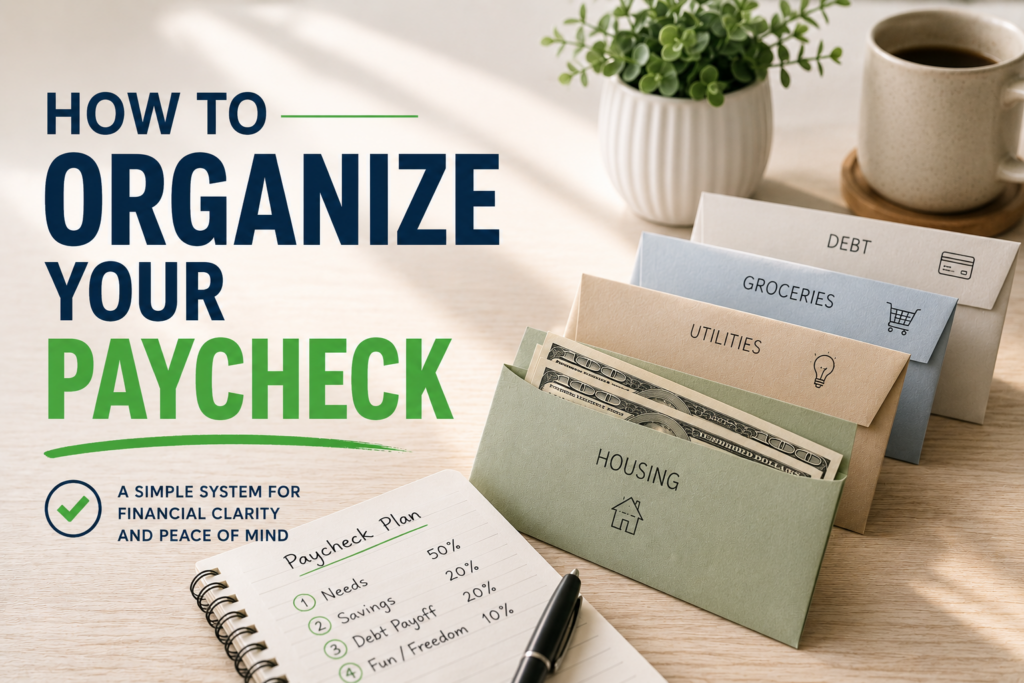
If this sounds familiar, you’ll probably relate to Why Payday Still Feels Stressful — Even When You Just Got Paid and How To Organize Your Money Better And Stop Living Paycheck To Paycheck.
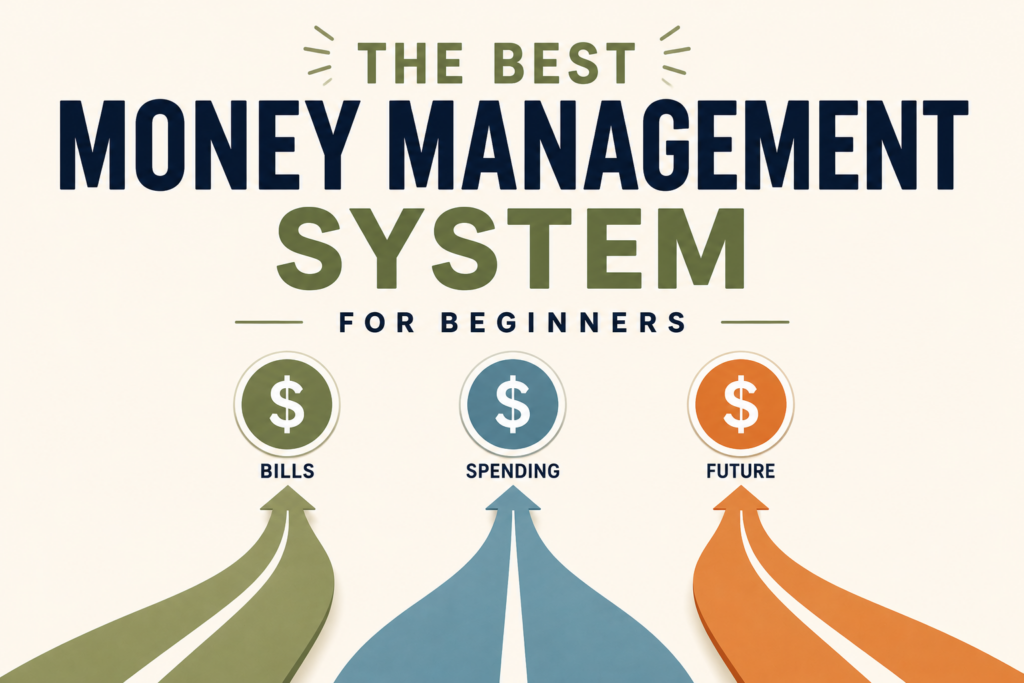
The biggest shift for me happened once I separated everything into lanes: Bills, Spending, and Future. The Bills Lane protects essentials. The Spending Lane handles regular life. The Future Lane moves money toward savings, debt payoff, and getting ahead instead of just surviving.
That separation changed the emotional experience of money almost immediately.
For the first time, I could actually see what was safe to use. I wasn’t accidentally spending hockey skate money on takeout during a chaotic week and trying to recover later. I wasn’t mentally borrowing from future bills every time I bought groceries. And I wasn’t opening my banking app trying to decode one giant pile of transactions anymore because everything already had a place.
The first month I used the lanes, I realized I had stopped checking my banking app three times while grocery shopping. I already knew what was in my account, what it needed to cover, and what was actually safe to spend.
That felt huge.
Not because I suddenly became rich. Because my money finally stopped feeling confusing.
That’s also why traditional budgeting never lasted for me long-term. Most budgets depend on constant attention, and eventually I would burn out. At first I’d feel motivated. I’d track expenses carefully, update categories, promise myself I’d finally stay organized this time. Then real life would hit. A busy week. A sick kid. An expensive grocery run. An exhausting month where I ordered takeout more than I planned because I simply could not handle cooking one more thing.
And suddenly the budget felt ruined again.
Most people are not overspending on ridiculous things. They’re spending on life while trying to hold everything together at the same time. That’s one reason posts like Why Budgeting Fails For Most People (And What Works Better) and The Simple Money System That Finally Made Our Finances Feel Manageable connect with so many readers.
The Money Lane setup felt different because the boundaries already existed before the spending happened. Once money for bills was seperated, I knew those essentials were protected. So when I bought groceries or filled the gas tank, I wasn’t secretly wondering whether I was hurting next week’s bills at the same time.
That constant background tension started fading.
And the strange thing is, the first changes weren’t dramatic financial milestones. It was smaller than that. I stopped checking my banking app constantly. I stopped feeling immediate panic when automatic payments came out. I stopped treating every normal purchase like it needed a full internal debate attached to it.
Money started feeling quieter.
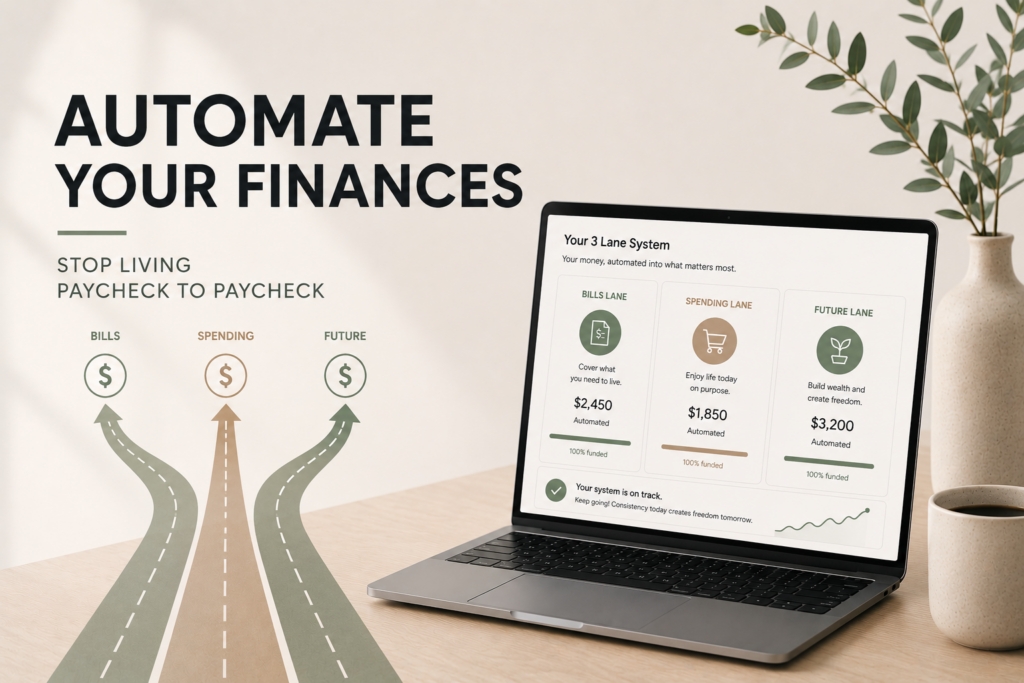
That’s also why I wrote How To Automate Your Finances And Stop Living Paycheck To Paycheck. Once your money is separated properly, automation becomes much easier because each lane already has a purpose.
I didn’t build the Money Lane System for people who want to obsess over spreadsheets and transaction categories. I built it for people who are mentally tired. People who avoid looking at their banking apps, restart budgets every few months, and feel embarrassed they still haven’t “figured money out” yet.
People who are tired of feeling like one expensive week erases all their progress.
That’s also the entire idea behind The 3-Lane Method For Escaping Survival Mode. The lanes create separation, clarity, and visible boundaries before the money disappears.
Honestly, you probably don’t need a more complicated budget.
You probably need fewer financial decisions. Clearer boundaries. Protected bill money. A visible spending limit. A way to stop accidentally spending money meant for future you.
That’s what the Money Lane System gave me.
Not some perfect financial life.
Just relief.
Once everything had a place, I finally stopped feeling like I was one bad week away from falling behind again.