Sometimes payday felt like a tiny celebration in our house.
Pizza instead of cooking. Ice cream on the way home. Walking through Walmart slower than usual because for one evening, I wasn’t automatically calculating whether we could afford every single thing we touched.
My oldest used to do this thing when we couldn’t afford something. They’d shrug really fast and say they didn’t actually want it anyway. Too fast. Like they were trying to protect me from feeling bad about saying no.
I still think about that sometimes.
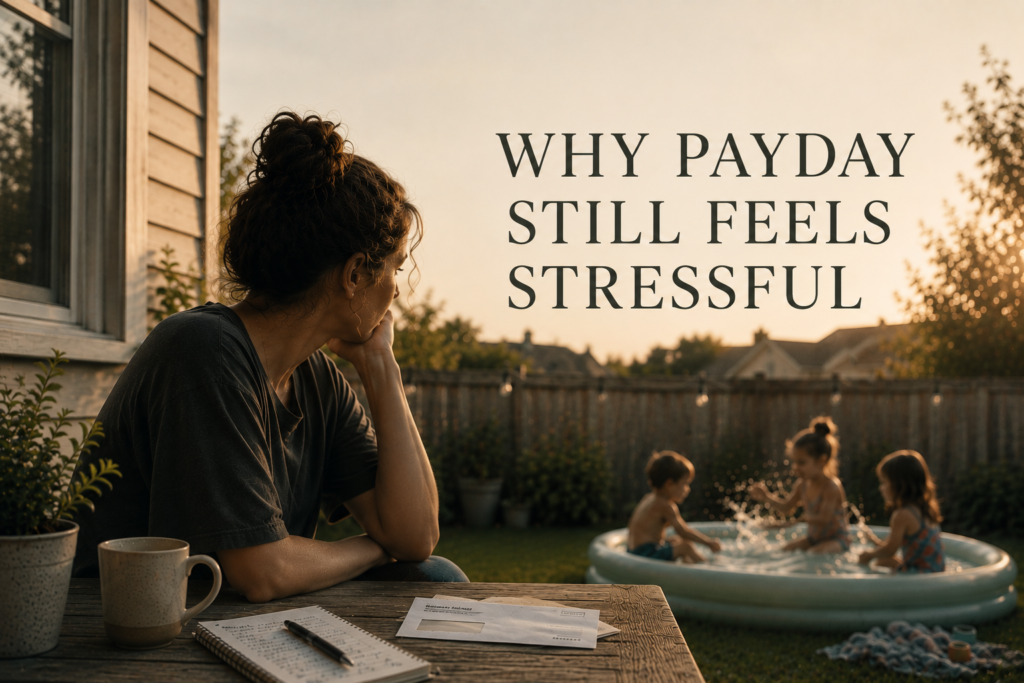
One summer, right after payday, I bought the kids one of those bigger inflatable pools. The kind with the thick ring around the top that slowly rises as it fills. The box showed this perfect backyard with crystal blue water and children grinning like summer was effortless.
I stood there debating it way too long.
Not because it was wildly expensive. Because I knew what buying anything felt like when money was tight. Every purchase came attached to consequences that showed up later.
But I was tired of being the mom who said no all the time. I didn’t want my kids’ memories of me to be someone who always looked worried about money.
So I bought the pool.
The kids were ecstatic loading the giant box into the cart like we’d just bought a waterpark. I remember getting home and realizing I’d forgotten half the things you actually need before anyone can even get in the water.
The tarp underneath so the grass and rocks wouldn’t destroy the bottom, the chemicals, the testing strips, and the steps because the sides were too high for the younger kids to climb over safely.
What I thought was going to be a fun little payday purchase quietly turned into another two-hundred-and-something dollars before anyone even swam once.
And the worst part is that none of it felt irresponsible at the time. These weren’t random impulse purchases. They were normal things connected to the original decision. Necessary things.
That’s what made living paycheck to paycheck feel so defeating sometimes. It usually wasn’t one huge financial disaster. It was the way ordinary life kept stretching every purchase wider than I expected.
I used to think my problem was spending too much. Looking back now, the real problem was that the paycheck already had too many demands attached to it before it even arrived.
The moment my pay arrived, I would immediately start doling it out mentally before the money had even settled in the account. Groceries we’d been stretching for days. Bills sitting in the back of my mind while I tried to sleep. Gas tanks hovering near empty. School forms needing cash tucked into envelopes by morning. Something in the house that suddenly couldn’t wait another month.
So the paycheck would land, and for a few hours I’d feel relieved before the invisible math started again.
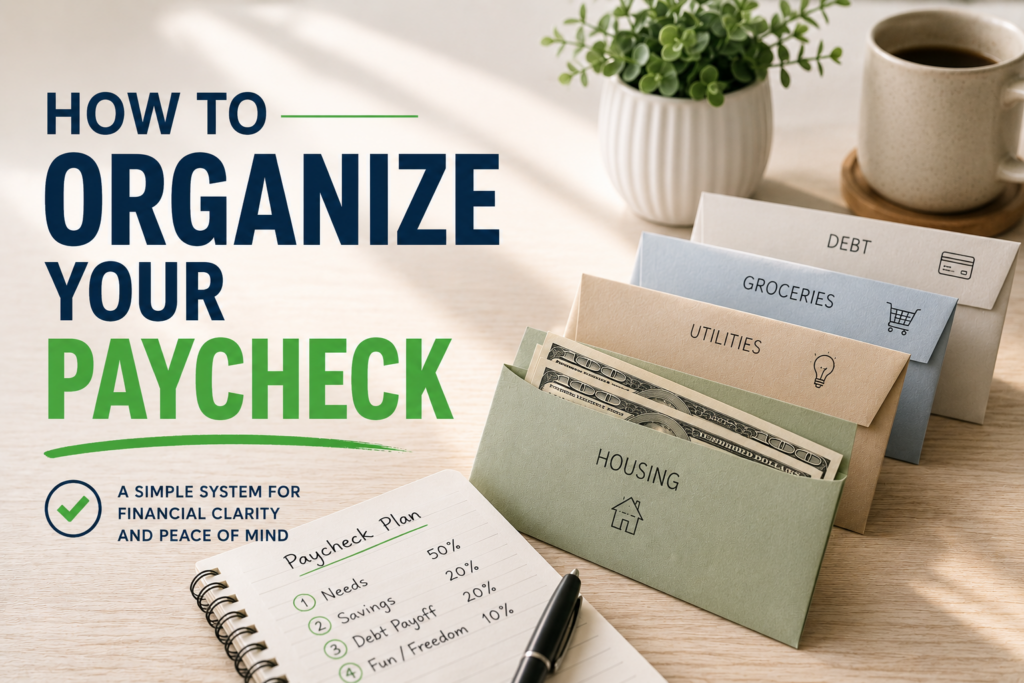
It took me a long time to realize I didn’t actually need a stricter budget. I needed a simpler way to organize my paycheck before life started eating through it.
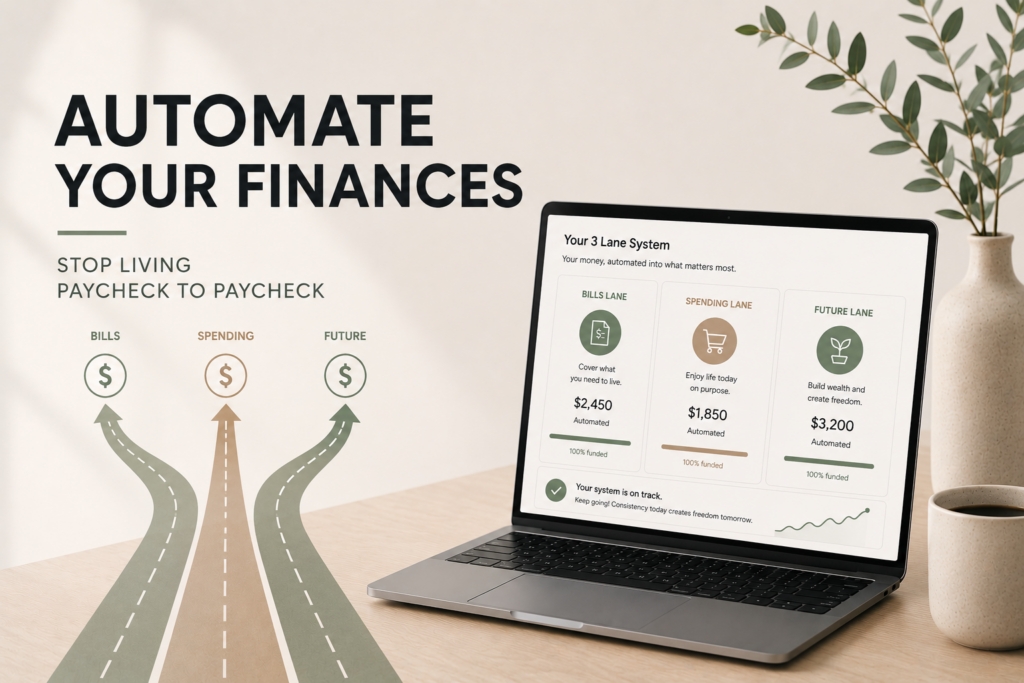
That’s the entire reason I eventually built the Money Lane System — because trying to manage bills, groceries, spending, emergencies, and future goals all from one chaotic account was taking up too much room in my head all the time.
Why Living Paycheck To Paycheck Feels So Exhausting
The hardest part about financial stress is how confusing it becomes after a while.
You work hard. You get paid. You try to be responsible. And somehow the money still feels thinner every month.
For a long time, I thought financially stable people just had more self-control than I did. But now I think many of them simply aren’t trying to manage their entire financial life mentally every waking hour.
Money becomes this constant background noise in your head. Standing in the grocery store estimating totals before items even hit the cart. Delaying purchases by three days because you know two automatic payments are still pending. Checking your banking app in parking lots before walking into stores.
The mental effort never fully stops.
That’s why my posts How To Stop Living Paycheck To Paycheck Without Extreme Budgeting and The Hidden Paycheck Trap: Why Payday Still Feels Stressful resonate with so many financially overwhelmed people.
One Of The Biggest Payday Habits That Keeps People Stuck
I don’t mean reckless spending. I mean the kind that happens after weeks of pressure when you’re completely done in.
The grocery upgrades because everyone was tired of cheap food. The takeout after a brutal week. The small purchase that made life feel easier for five minutes. The yes you say because you’re emotionally beaten down from constantly saying no.
People talk about impulse spending like it always comes from greed or carelessness, but a lot of the time it comes from exhaustion.
I remember getting weirdly good at thrift stores when the kids were younger. Sometimes I’d clean up used toys or clothing so carefully that the kids thought they were new. I wasn’t trying to trick them. I just wanted them to feel excited opening something without me looking stressed while they did it.
Honestly, that’s part of why Why Payday Habits Matter More Than Budgeting matters so much to me now. Most people already know basic money advice. The harder part is what happens emotionally after the paycheck hits the account.
Why Keeping Your Paycheck In One Account Creates Financial Stress
I don’t think I realized how much anxiety this caused until I stopped doing it.
When bills, groceries, spending money, subscriptions, and random household expenses all sit together in one account, every purchase starts carrying uncertainty.
You see one balance, but your brain knows half the money already belongs somewhere else.
The time I stood at the grocery checkout pretending to look for my rewards card while transferring money between accounts on my phone was probably the moment I realized money was taking up way too much head space.
It’s also why separating money before spending starts matters so much inside the The Three Lane System. The entire idea is that money feels calmer when it stops existing in one giant pile.
Bill money stops feeling spendable. Groceries stop accidentally becoming takeout money. Future goals stop getting whatever happens to survive the month. And maybe most importantly, your brain stops trying to manually hold the entire financial household together all day long.
That’s also why How To Organize Your Money Better and Stop Living Paycheck To Paycheck became such an important shift for me personally. Once my paycheck had clearer jobs, I stopped feeling like I was mentally chasing my money around all month.
Waiting Too Long To Decide Where The Paycheck Goes
This quietly keeps people stuck for years.
The moment my pay arrived, I would immediately start doling it out mentally. Some went to groceries before I even entered a store. Some already belonged to bills. Some disappeared into gas, school stuff, and whatever random household thing suddenly couldn’t wait another week.
Then life would keep happening on top of that.
There was even a point where I borrowed money from my kid’s piggy bank to get through the week. I paid it back, obviously. But I remember thinking: how did we burn through another paycheck already? We weren’t taking vacations or buying expensive things. It was groceries, bills, gas, kids’ stuff, things the house needed. Just normal life somehow eating every dollar again.
That’s the core idea behind the 10-Minute Paycheck Plan.
Not stricter budgeting or obsessively tracking every purchase. Just deciding where the paycheck goes before the rest of life starts pulling at it.
That single habit reduced more financial stress for me than any budget spreadsheet ever did.
It’s also why What To Do Every Payday Before Your Money Disappears connects with so many people. Most financial problems don’t begin after the money is gone. They begin during those first few days after getting paid.
Financial Stress Changes People Quietly
I don’t think people talk enough about how private financial stress becomes.
The way you memorize which bills clear fastest. The way you feel your stomach tighten when your phone buzzes with a banking notification. The way you mentally calculate how many days are left until payday every time you fill the gas tank.
After enough time, money stops feeling like math and starts feeling physical — heavy in a way that follows you around all day.
I don’t think most financially overwhelmed people need more shame or harsher budgeting rules. I think they need fewer money gears grinding in their head all the time.
That’s what finally started helping me. Not perfection. Not becoming some hyper-disciplined finance person. Just organizing the paycheck before exhaustion, life, and emotional spending got to it first.
And honestly, the first real sign things were changing wasn’t a bigger bank balance.
It was realizing payday no longer felt fragile.
Payday shouldn’t feel like a rescue mission every single time.
It should feel like adding fuel to a car that’s already running properly — not standing on the side of the highway trying to figure out how to get home after you ran out of gas.