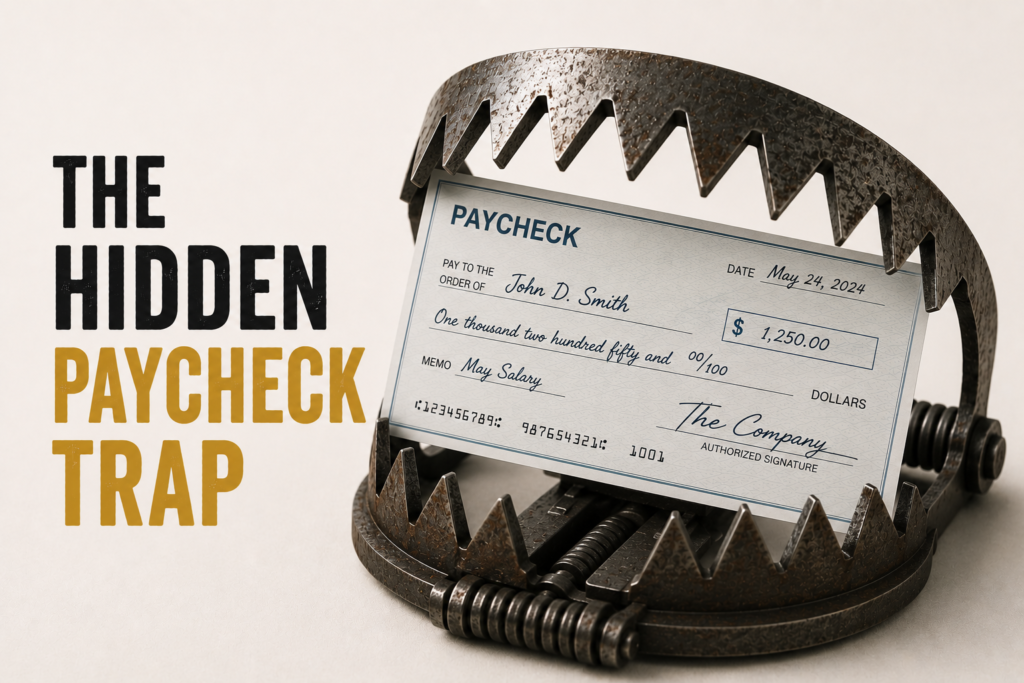

I used to think financial stress would feel dramatic.
I thought it would look like maxed-out credit cards, shopping problems, or some obvious financial disaster that everyone around you could see.
Instead, it looked like standing in my kitchen trying to remember whether the insurance payment had already come out before buying groceries. It looked like checking my bank balance in a parking lot before walking into a store. It looked like lying in bed replaying transactions in my head because something still felt “off,” even if technically the numbers should have worked.
And after a while, that constant tension started feeling normal.
That’s the strange thing about living paycheck to paycheck. The stress slowly blends into everyday life. You stop asking yourself how to get ahead and start asking yourself how to make it through the next week without something unexpected knocking everything sideways again.
A lot of people are living like that right now. Not because they’re irresponsible. But because managing money starts feeling like a second full-time job nobody prepared you for.
Why So Many Budgets Stop Working
Most budgeting advice sounds reasonable until you’re already mentally drained.
Track every dollar.
Review your spending.
Cut unnecessary purchases.
Stay disciplined.
But what happens when you’re already overwhelmed?
What happens when every purchase already feels emotionally loaded? When opening your banking app raises your stress level instead of lowering it? When you’ve restarted your budget so many times that even thinking about budgeting makes you tired?
It’s not because they don’t care about money, but because you’re trying to manage too many financial decisions manually all day long.
You start carrying everything in your head:
- upcoming bills
- account balances
- spending limits
- due dates
- subscriptions
- grocery totals
- and whether payday is going to stretch far enough this time
That mental tracking wears people down. It’s also why so many people keep wondering how to stop living paycheck to paycheck, and why their budget won’t work. And all they want is a siple financial system that shows them how to organize finances… not complicate financial advice and bedgeting systems.
They’re looking for financial breathing room.
If that sounds familiar, read How To Stop Living Paycheck To Paycheck and Why Budgets Don’t Work because most money stress starts long before someone completely runs out of money.
So What Is the 3-Lane Method?
The basic idea behind the Money Lane System is simple:
Your money becomes stressful when everything is mixed together.
Bills, groceries, subscriptions, savings, random spending, emergencies — all sitting in one account, forcing your brain to constantly remember what every dollar is supposed to do.
The 3-lane approach separates your money before life starts spending it.
- Bills Lane → money for rent, utilities, insurance, debt payments, and fixed obligations.
- Spending Lane → money for groceries, gas, takeout, and normal daily life.
- Future Lane → money moving you forward through savings, debt payoff, or creating breathing room.
That separation changes the experience of money surprisingly fast.
You stop wondering whether grocery money is secretly bill money. You stop mentally sorting transactions every night. You stop feeling blindsided by expenses you forgot were coming.
I remember transferring the same $50 between accounts multiple times in one afternoon trying to keep everything from colliding before automatic payments hit. That constant financial juggling is exhausting. The lane approach reduces a lot of that invisible pressure because your money already has a place to go before chaos starts.
The full breakdown is explained inside The Three Lane System: 5 Day Reset — Take Control of Your Money Without Tracking Every Dollar, part of the larger Money Lane System approach to budgeting without budgeting and organizing money in a way real people can actually maintain.
“But What If I Don’t Make Enough?”
That’s a fair question.
And honestly, sometimes income is part of the problem. Some people are genuinely stretched too thin financially.
But a surprising number of people are also dealing with extra stress because their money has no separation at all. Everything comes out of one account. Every expense feels uncertain. Every bill feels emotionally heavy because nothing feels organized ahead of time.
That creates constant financial pressure, even when the numbers technically should work.
The lane approach helps because it reduces the number of decisions your brain has to keep making every day. You already know the bills are covered. You already know what spending money is available. You already know part of your paycheck is moving forward before it disappears into everyday life.
That predictability creates stability people can actually feel.
The First Thing That Usually Changes
It usually isn’t your income. It’s your relationship with money.
You stop opening your banking app with immediate dread. You stop moving money around constantly trying to prevent overdrafts. Grocery shopping stops feeling like a math problem you could fail at any second.
Things begin feeling lighter. Not perfect. Not magically fixed. Just less fragile. And honestly, when you’ve been carrying financial stress for years, that shift matters more than people realize.
Why This Feels More Sustainable
The reason the lane approach works for overwhelmed people is because it works with real behavior instead of pretending emotions don’t exist.
Real people get tired. They forget things. They spend emotionally sometimes. They do not want to track every transaction forever.
Most people do not need a stricter budget. They need a simpler way to organize money so their entire financial life stops depending on constant attention.
That’s also why the 10-Minute Paycheck Plan focuses on making decisions immediately when you get paid instead of waiting to see what survives at the end of the month.
Because unassigned money disappears quietly.
You can also read The Hidden Paycheck Trap and I Didn’t Realize Financial Stress Was Making Me Sick if your finances currently feel exhausting to manage.
You Do Not Need to Become a Different Person
A lot of financial advice quietly makes people feel like they need to completely reinvent themselves before their money can improve.
You do not need:
- perfect discipline,
- a complicated spreadsheet,
- a color-coded budgeting binder,
- or endless motivation.
You need a setup that still works when life gets stressful, busy, emotional, or tiring.
That’s a very different goal.
Final Thoughts
A lot of people are trying to manually manage financial stress every single day while also working, parenting, commuting, cooking, answering emails, and trying to function like normal human beings.
That wears people down.
The 3-lane approach is not about becoming perfect with money overnight. It is about making money feel more stable, more organized, and less emotionally exhausting to manage.
Because sometimes the first real sign of progress is not a huge savings account.
Sometimes it’s realizing payday no longer feels like something you have to survive.
Related posts you may find helpful: