Warning: this is not a story about getting rich in 90 days.
I didn’t suddenly make a ton of money.
This is about what happened when I finally stopped living in constant financial panic.
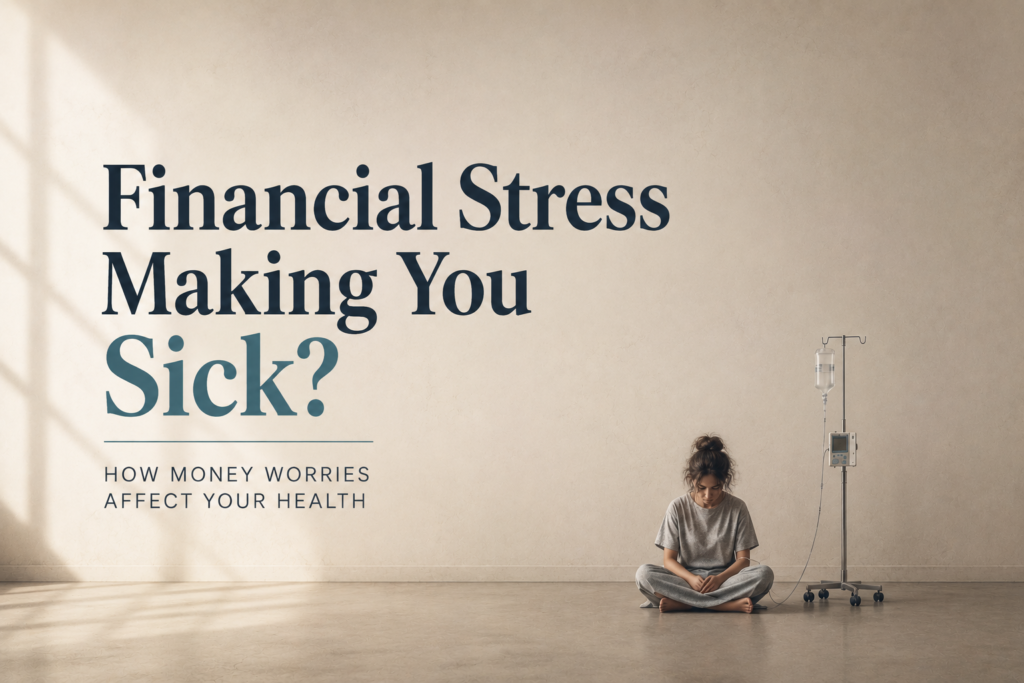
Financial stress was affecting my body long before I admitted how bad things had gotten.
The headaches came first. Not migraines. Not take-me-to-the-ER pain. Just this constant tension headache that slowly built throughout the day until it felt like pressure sitting behind my eyes every evening. By nighttime, my shoulders ached, my jaw hurt, and I felt exhausted in this deep physical way that sleep never seemed to fix.
At first I blamed everything else. Stress. Bad sleep. Too much caffeine. Too much screen time. At one point I even wondered if it was peri-menopause because I couldn’t explain why my body always felt tense and exhausted all the time.
But eventually I realized the tension never really left because the source never really left.
It was money.
Not one giant financial disaster either. Just years of financial stress quietly keeping my body stuck in fight-or-flight mode. Even when nothing terrible was actively happening, my brain still acted like danger was nearby. Another expense. Another setback. Another thing that could go wrong.
I carried that feeling everywhere. Driving. Trying to fall asleep. Watching TV. Working. Even sitting still.
I had become hypervigilant with money. My brain was constantly scanning for the next problem. I was clenching my jaw so often without noticing that eventually it started hurting almost every day. My dentist mentioned signs of grinding and tension, and that hit me harder than I expected because I’d always had good teeth.
That was the moment I realized this wasn’t normal anymore.
My finances were affecting my health.
And for the first time, I realized I couldn’t keep treating my financial stress and my physical health like they were separate problems.
Eating Became My Preferred Coping Method
Eating became my preferred coping method, although I didn’t fully realize it at the time. It wasn’t dramatic binge eating. It was constant little comforts because I felt mentally drained all the time.
Drive-thru coffee because I “deserved something.”
Takeout because I couldn’t mentally handle cooking after stressful days.
Snacks late at night because my brain wouldn’t stop racing.
It felt like temporary relief. Usually the comfort lasted about fifteen minutes before the guilt showed up.
Over time I gained weight, slept worse, felt worse physically, and became even more stressed about myself and my finances, which only made me want comfort again. It became this exhausting cycle where stress was draining me mentally and physically, and then I was using food and spending to cope with the exhaustion.
And afterward came the guilt about the spending, my body, and feeling out of control.
I remember looking up massage prices one night because my neck and shoulders hurt so badly. Not luxury. Relief. I just wanted my body to stop hurting for an hour.
Then I closed the tab almost immediately because I couldn’t justify spending the money.
That moment stayed with me because I realized how trapped I felt psychologically. Even trying to take care of myself triggered guilt.
Nobody Knew Just How Bad Things Were
That’s the strange thing about financial burnout. You can still look functional from the outside.
I still went to work. Still answered texts. Still laughed at things. But internally, I was so freaking tired all the time, and I still couldn’t sleep because of the stress.
There were days I cried in the shower because it was the only place I could fall apart without my kids hearing me.
Tiny decisions started feeling enormous. I could spend twenty minutes trying to decide whether to replace something basic I actually needed. I avoided checking things because every number felt like bad news before I even looked properly. Even small purchases could ruin my mood afterward because I’d spend hours replaying whether I should have spent the money.
I think the hardest part was realizing how long I thought this level of stress was normal. How many years I spent physically tense all the time. How long I kept telling myself:
“Next month will feel easier.”
while my body kept getting worse.
The Breaking Point Was Quiet
There wasn’t some dramatic financial collapse or giant rock-bottom moment.
One night I was lying in bed with a headache building behind my eyes while unconsciously clenching my jaw again, and I remember thinking:
“This is hurting me.”
Not:
“I need to get rich.”
Not:
“I need a perfect budget.”
Just:
“I cannot keep living like this.”
Deep down, I knew if I didn’t deal with the root problem, I was going to keep carrying this stress physically for years.
Something had to change.
What Changed Over the Next 90 Days
The First 30 Days: I Stopped the Chaos
I didn’t start by trying to become wealthy.
I started by trying to stop feeling like I was drowning every day.
Before that, all my money felt like one giant pile I was constantly pulling from and worrying about. Every expense came from the same account. Nothing felt clearly decided ahead of time, so every purchase felt risky.
That uncertainty was exhausting.
So the first thing I changed was how my money was organized. Bills stopped sitting beside spending money. Future expenses stopped competing with random daily spending. I stopped treating every dollar like it had fifteen jobs at once.
The emotional relief came faster than I expected. For the first time in years, I stopped moving money between accounts constantly. I stopped checking pending transactions obsessively. I stopped feeling immediate panic every time I opened my banking app.
I still wasn’t wealthy.
But I also wasn’t doing financial triage every single day anymore.
Around Day 30, My Body Started Responding
This was the part that shocked me most.
One day I noticed my shoulders didn’t feel tight all afternoon. That sounds small, but it honestly stopped me in my tracks.
My head didn’t constantly hurt anymore. My jaw stopped aching every morning. I wasn’t replaying purchases in my head for hours anymore. I could watch a movie without mentally calculating numbers in the background.
That’s when I realized my body had been reacting to uncertainty as much as money itself. Even though I still wasn’t financially ahead, I finally knew where things stood.
Once I finally knew where things stood, my brain calmed down before my finances even really changed.
Around Day 60, Life Started Feeling Manageable Again
This is where things became emotionally different.
I started making it to payday without panic. Small unexpected expenses stopped feeling catastrophic. I wasn’t moving money around constantly trying to cover transactions anymore. I could grocery shop without checking my account three times first, which honestly used to feel impossible to me.
I also stopped using food and spending as constant emotional relief because my body wasn’t stuck in survival mode all day anymore.
I started cooking more again and eating food that actually made me feel better physically. Not because I suddenly became disciplined. I just finally had the mental energy again.
I slept more deeply. Thought more clearly.
For the first time in years, I left money sitting untouched in my account without immediately needing it somewhere else. That feeling was emotional because I realized how long I had lived without any margin at all.
Around Day 90, I Finally Felt Stable
Not rich. Not debt-free. Not financially perfect.
Stable.
There’s a difference.
My shoulders didn’t feel tight all the time anymore. I could check my bank account without immediately feeling anxious. I stopped needing constant little comforts just to get through the week. Food stopped feeling like emotional relief. I wasn’t lying awake mentally replaying every purchase before bed.
I could spend money on something necessary without feeling like it was going to blow up in my face afterward.
And maybe the biggest thing was this:
my body finally stopped feeling like it was bracing for something all the time.
One day I realized I hadn’t had that constant tension headache in a while.
It had quietly disappeared along with the chaos.
What Actually Helped Me Move Forward
What finally changed things wasn’t extreme budgeting or trying to track every tiny purchase.
It was reducing the constant uncertainty around money.
Less chaos, fewer decisions, more clarity.
When I eventually found the ideas behind the Money Lane System, it was the first financial approach that actually matched how overwhelmed I already felt. Instead of trying to control money after it disappeared, the focus was on organizing it ahead of time so everything stopped feeling like it was going to blow up in my face.
And honestly, I think the simplicity of it shocked me most. I never realized managing money could actually feel easier instead of harder. Or that it should. That difference changed more than my finances. It changed how my body felt every day.
If Financial Stress Is Affecting Your Health Right Now
Pay attention to that.
The headaches. The jaw clenching. The exhaustion. The insomnia. The feeling that your body never fully relaxes anymore.
Those things are real.
Long-term financial stress lives somewhere. Mine lived in my muscles, my sleep, my breathing, and my thoughts for years. And you do not need to become wealthy to start feeling better physically and emotionally.
Sometimes reducing chaos, uncertainty, and constant financial panic is enough for your body to finally start calming down again.
Related Posts
- Why Budgets Don’t Work (And You’re Probably Still Broke)
- The Hidden Paycheck Trap: Why Payday Still Feels Stressful
- How I Created Financial Breathing Room After Years of Budgeting
- What To Do With Your Next Paycheck Before It Disappears
- The 3-Lane Method for Escaping Financial Survival Mode
- How To Stop Living Paycheck to Paycheck Without Extreme Budgeting