I have tried budgeting the old fashioned way, the new fashioned way, and the way that works.
I used notebooks, spreadsheets, cash envelopes, budget binders, and budgeting apps with pie charts so detailed they looked like weather radar. At one point, I was checking multiple finance apps, moving money between accounts, and standing in the grocery store trying to remember what bills had not cleared yet. I would open my banking app in the parking lot beforehand just to make sure I was not about to accidentally spend money that technically belonged somewhere else.
At that point, it should have been obvious something about my approach was not working, because technically, I wasbudgeting. I knew where my money was supposed to go. I could tell you my monthly spending averages. I could categorize purchases like a part-time accountant. But my finances still felt stressful all the time, and every paycheck already felt claimed before it arrived.
I do not think most people want to spend their lives checking finance apps and staring at colorful spending charts. Most people just want to buy groceries without mentally subtracting three upcoming bills while standing in line.
Eventually, I realized my problem was not that I needed better budgeting tools. My problem was that I was trying to organize money after it had already scattered itself across bills, subscriptions, groceries, gas, school expenses, and whatever inflation decided to hit that month.
Around that time, I started coming across ideas behind the Money Lane System. The idea of organizing money before it disappeared instead of constantly tracking it afterward immediately made more sense to me than another budgeting app ever had. I was exhausted from reacting to my finances all the time.
If you have ever mentally calculated bills while trying to fall asleep, refreshed your bank account before buying groceries, or avoided checking your finances for a few days because you already knew it was bad, you probably understand what I mean.
Why Budget Apps Worked For Me At First
I understand why budgeting apps are popular because in the beginning, they made me feel hopeful too. There is something comforting about finally seeing all your spending in one place. It feels productive, organized, and responsible.
For a little while, it honestly felt like I had become one of those adults who meal preps on Sundays and remembers passwords without resetting them fourteen times.
Then real life showed up. A higher grocery bill. A birthday gift. A prescription. A school fundraiser. Takeout after a long week because nobody in the house had the energy to cook. Property taxes increasing. Groceries somehow costing twice what they used to. Another expense showing up at exactly the wrong time.
Eventually, the budgeting app notifications stopped feeling helpful. Nothing feels quite as humbling as getting a cheerful notification informing you that you exceeded your dining budget while sitting in a drive-thru eating fries you bought because the day completely unraveled by 2 PM.
The problem was not that the app was inaccurate. The problem was that I already knew.
The Exhausting Part Nobody Talks About
Tracking every purchase sounds simple in theory, but in reality it follows you around constantly. You have to categorize transactions, review spending, remember subscription renewals, move money around, account for your spouse’s spending too, and keep checking apps and charts even when money is already stressing you out.
That might work well for people who naturally enjoy tracking details. I am not one of those people, and honestly, I do not think a lot of financially overwhelmed people are either.
When life gets busy or emotionally heavy, detailed budgeting becomes one more thing sitting in the background of your mind all the time. You fall behind for a few days, then a few weeks, until the task of getting caught up starts feeling so monumental that you would rather quit entirely.
I used to avoid budgeting apps the same way people avoid emails from the dentist. Not because I did not care. Because I already knew there was going to be a problem waiting for me.
The Real Issue Was My Bank Account Setup
It took me an embarrassingly long time to realize that my biggest problem was not actually overspending.
Sometimes it was. I have absolutely stress-spent my way through a rough week before. But most of the time, the bigger issue was that all my money lived in one account.
Bills came out of the same place as groceries, which came out of the same place as mortgage payments, and daycare, and copays, and the phone bill. Everything sat in one place together, like a big pot of financial stew.
Because everything was mixed together, every purchase felt uncertain, even if I technically had enough money. I never felt fully comfortable spending anything because I could not immediately tell what portion already belonged somewhere else.
So I constantly checked my balance, replayed upcoming expenses in my head, and felt like I was one forgotten bill away from a problem. That kind of financial tension follows you everywhere. It sits beside you while you drink coffee, shows up during grocery shopping, and sneaks into quiet moments when you are supposed to be relaxing.
And carrying that level of stress constantly is hard on you.
I honestly did not realize how much financial stress was affecting me physically until I got sick from it. I wrote more about that in I Didn’t Realize Financial Stress Was Making Me Sick because I think a lot of people underestimate what ongoing money stress actually does to the body.
Why Banking Systems Worked Better For Me
What finally helped me was separating my money before spending started happening instead of tracking it harder afterward.
That distinction changed everything for me because once I started using separate accounts for bills, spending, and future goals, my finances immediately felt easier to understand. Not perfect, but noticeably taking up less of my mental resources. I know it is a cliché, but it really did feel like a weight being lifted.
For the first time in years, I could look at my spending account without mentally sorting through upcoming bills at the same time. I stopped bracing myself whenever I opened my banking app, like something might jump out at me.
I also stopped constantly wondering:
“Wait, was that money already supposed to go somewhere?”
That question had been running quietly in the background of my brain for years.
This is one of the reasons I connected so strongly with the ideas behind the Money Lane System. At first, the separate money lanes made my finances easier to understand, but as I dug deeper into it, I realized the bigger goal was reducing financial chaos before it starts. Paychecks stopped feeling so reactive. Bills stopped competing with spending. I stopped feeling like I was constantly trying to catch up with my own money.
That idea sounds almost too simple at first, but honestly, simple was exactly what I needed. I did not need another app subscription, another spending alert, or another colorful chart explaining that groceries are expensive now.
I needed my finances to feel manageable again.
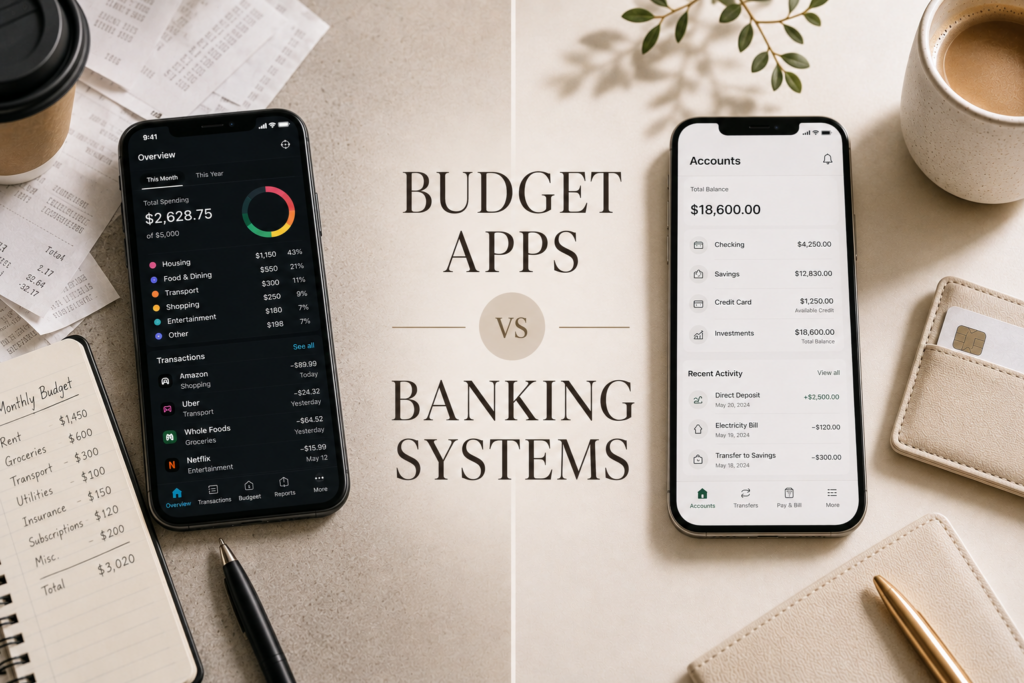
Budget Apps vs Banking Systems
For me, the biggest difference came down to timing. Budget apps mostly helped me react to money after it had already been spent, while a banking setup helped me organize money before the month got messy.
I underestimated how much mental energy that constant financial sorting was taking from me until it finally stopped.
When every dollar sits together in one account, your brain has to constantly remember what bills are still pending, what spending is safe, what subscription is about to renew, whether your spouse already moved money around, and whether you forgot something important. After a while, it feels like your brain is carrying your entire financial life around at all times.
Separating money reduced a lot of that mental clutter because my accounts started answering some of those questions for me.
Why I Think So Many People Burn Out From Budgeting
A lot of budgeting advice quietly assumes people have endless emotional energy.
But many people trying to get their finances under control are already overwhelmed. They are raising families, dealing with life’s little disasters, worrying about job security, trying to recover from debt, stretching groceries, and carrying financial pressure that never fully lets their brain relax.
After a while, I stopped wanting a “better” budgeting app. I wanted something that required less attention from me every single day. I was already thinking about money constantly, and I did not want managing it to become another full-time responsibility sitting in the background of my life.
That is a big part of why I eventually wrote posts like How To Stop Overspending Without Tracking Every Purchase and The Best Bank Account Setup for Managing Money Without Budgeting.
I think a lot of people are not actually looking for more complicated budgeting systems. They are looking for a calmer way to handle money.
What Actually Changed For Me
The biggest change was not becoming “better” with money. It was reducing the number of financial decisions I had to make every day. Once my bills were separated, my spending became clearer naturally. I stopped accidentally spending bill money because the bill money was no longer sitting beside everything else pretending to be available.
That lowered my stress more than any budgeting app ever did, and surprisingly, I started spending more responsibly once I stopped feeling financially scrambled all the time. Not because I suddenly became disciplined but because I finally felt like I could breathe a little around money again.
There is a big difference between organized finances and constantly monitored finances. I did not understand that for years.
So Which One Works Better?
Honestly, I do not think budgeting apps are useless. For some people, they work really well. But if you keep restarting budgets, avoid checking finance apps, feel drained by tracking every purchase, constantly wonder where your paycheck went, or feel anxious every time you open your bank account, then a banking-based setup may fit your life better.
Especially if your goal is not perfect budgeting.
Just less stress. Less guessing. Less mental math at midnight. Less feeling like every paycheck disappears before you even catch your breath. That is what finally mattered to me. Not financial perfection. Just feeling a little calmer every time I got paid.