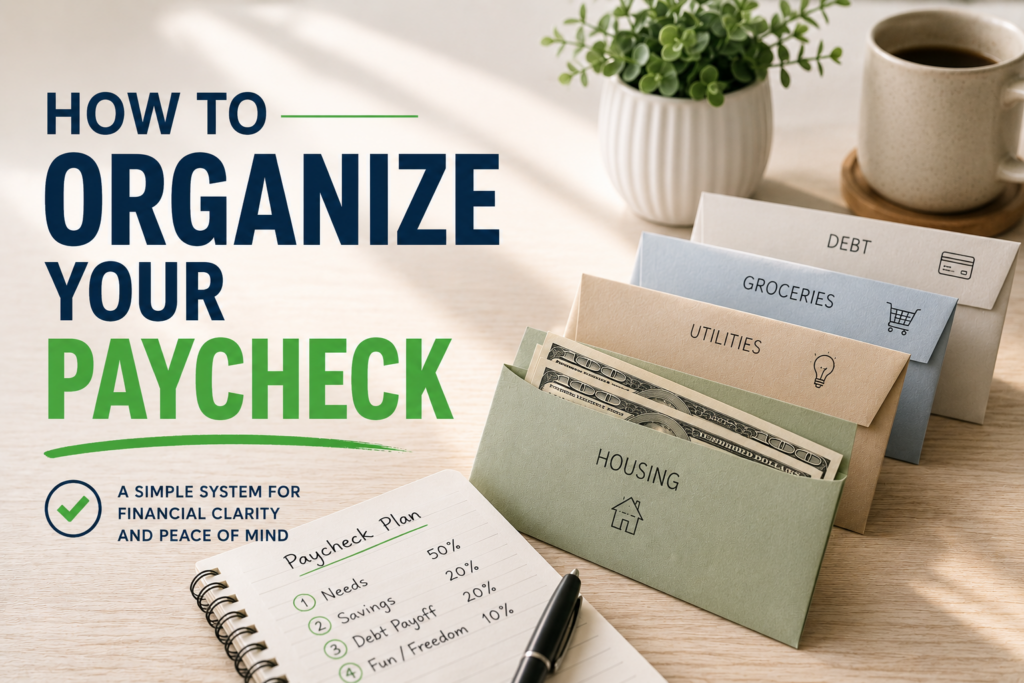

I used to think financial organization meant becoming better at budgeting.
Better at tracking.
Better at self-control.
Better at saying no constantly.
Every month felt like I was trying to fix my finances from scratch again. I’d promise myself I was finally going to stay on top of everything, and then life would happen. An unexpected bill would show up. Grocery prices would be higher than I expected. The kids needed something for school. I’d order takeout because I was exhausted and didn’t have the energy to cook.
Then the guilt would start all over again.
But honestly, most of my money stress came from one simple problem: all my money was mixed together.
Bills sat in the same account as grocery money. Savings got accidentally spent. Paydays disappeared before I even processed that I’d been paid. I was constantly opening my banking app trying to mentally calculate things like:
“If I pay the plumber, will my electric bill bounce?”
“Can I buy groceries now or do I need to wait until Friday?”
“Did that insurance payment already come out yet?”
That kind of constant catching up creates a level of mental overload that’s hard to explain unless you’ve lived it.
At some point, I realized I wasn’t actually bad with money. I was trying to manage too much financial chaos inside one account.
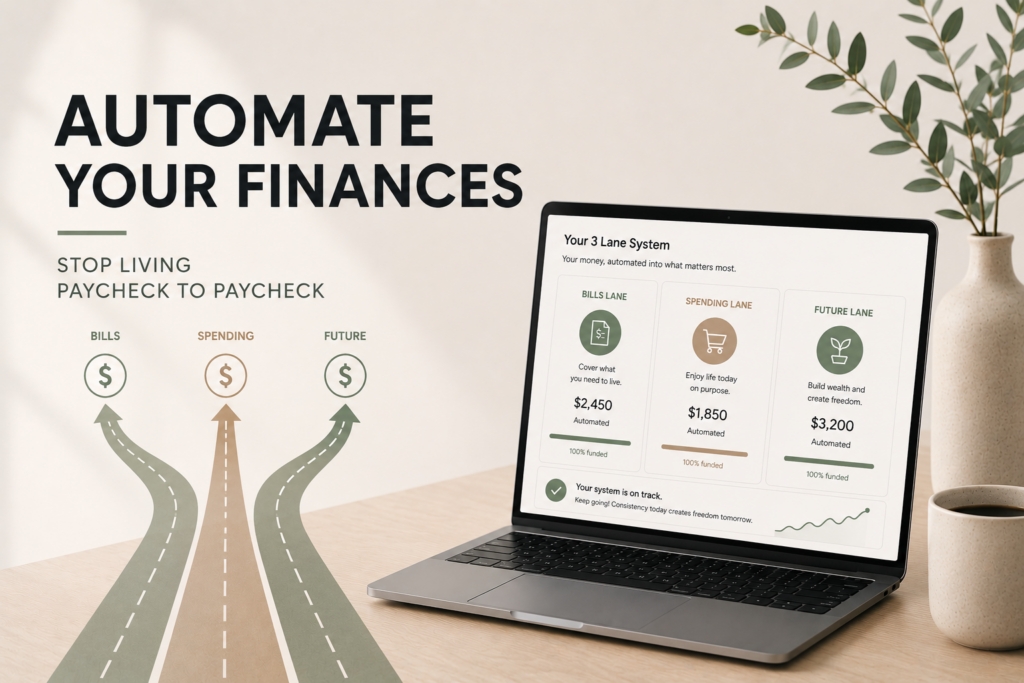
The biggest thing that changed my finances was separating my money before life started spending it for me. Now when I get paid, bill money gets moved immediately, spending money stays separate, and future money gets transferred before I touch it. Most of my bills are automated too, which means I’m not constantly trying to remember due dates or move money around at the last second.
That idea became the foundation of the Money Lane System, and honestly, it made my finances feel calmer almost immediately.
I also realized I didn’t need a perfect budget. I needed a simple monthly routine that kept things from quietly sliding back into survival mode.
None of this takes hours. Most months, this reset takes less time than the energy I used to spend avoiding my finances altogether.
If separating money is something you struggle with, “The Best Bank Account Setup for Managing Money Without Budgeting” and “What Your Paycheck Should Cover First Every Month” fit naturally alongside this approach.
1. I Separate My Paycheck Immediately
This is still the biggest thing that changed my finances emotionally.
When I get paid, bill money gets separated first. Spending money stays separate, and future money gets moved before I touch it. Keeping everything in one account used to make me feel financially confused all the time. Every grocery trip felt like mental math, and every purchase made me second guess myself.
Separating my paycheck removed a huge amount of mental noise from my life.
Payday finally stopped feeling gone before it even arrived.
2. I Review Upcoming Bills Before The Month Starts
I don’t do anything complicated here. I just take a few minutes to look ahead at what’s due, what might be higher than usual, and whether any timing issues could cause problems.
Most money pressure comes from surprises. Looking ahead before the month starts helps me feel more grounded instead of constantly reacting halfway through the month.
Even ten quiet minutes reviewing bills helps reduce a surprising amount of anxiety.
3. I Refill My Emergency Buffer If I Used It
Even a small emergency buffer changes how life feels emotionally.
Without one, every unexpected expense feels heavier than it should. A prescription, school expense, car repair, or higher grocery bill can suddenly make the whole month feel unstable.
A $200 repair used to feel like it could ruin my entire month financially.
Now, when I use part of my buffer, I try to slowly refill it again before focusing on bigger goals. That breathing room matters more than people realize when you’re used to feeling financially behind all the time.
4. I Fix One Money Leak Every Month
I don’t try to completely overhaul my spending anymore because that usually just leaves me burned out and frustrated a few weeks later.
Instead, I look for one thing quietly draining money without adding much value to my life. Sometimes it’s canceling a subscription I forgot about. Sometimes it’s realizing I started ordering takeout too often during stressful weeks. Other times it’s simply paying closer attention to grocery sales again.
Small leaks feel harmless at first, but over time they slowly tighten everything financially.
This is also why “Why Budgeting Fails For Most People (And What Works Better)” resonated with me so much. Most overspending isn’t about irresponsibility. It usually comes from exhaustion, convenience, survival mode spending, or trying to make life feel easier for a minute.
5. I Aggressively Pay Down Small High-Interest Debts
Small debts create a surprising amount of heaviness.
Even when the balances themselves aren’t huge, constantly carrying multiple payments makes life feel like constant catching up. I’d rather fully eliminate one stressful balance than barely move several at once.
There’s something so gratifying about removing one payment completely and knowing it’s gone for good.
6. I Keep Financial Documents Organized
This sounds boring, but it saves me stress constantly.
I keep bills, tax documents, receipts, insurance paperwork, and statements organized in folders — some physical, some digital. I used to waste so much time digging through piles looking for something I suddenly needed right away — a tax paper, a receipt, a bill confirmation, insurance information.
Now everything has a place.
Plus, it reduces clutter both financially and mentally. When finances already feel overwhelming, even small disorganization adds to the feeling of constantly falling behind.
And honestly, it doesn’t need to be perfect. Even just keeping everything in a box in your bedroom closet and sorting it once or twice a year is better than losing receipts because they got mixed in with random papers that ended up in the trash, or having your five-year-old spill juice all over an important document sitting on the counter somewhere.
7. I Check Grocery And Household Spending — And Review What Actually Worked Last Month
I don’t obsess over every dollar anymore. I just pay attention to patterns.
Did grocery spending creep up again? Did convenience spending explode because I was exhausted? Did anything actually make life feel easier financially last month?
This part matters because I used to repeat the same habits without noticing the patterns behind them. Now I pay more attention to what actually helps reduce stress and what quietly pushes me back toward survival mode.
8. I Set Goals For Next Month Before My Paycheck Arrives
Before my next paycheck comes in, I decide what needs attention first, what I want my money to accomplish, and where my paycheck needs to go before spending starts.
That one habit reduced impulsive spending more than budgeting ever did for me because once money sits there unassigned, it disappears fast.
If Your Finances Feel Constantly Mixed Together, Start Here
One of the biggest things that reduced my financial overwhelm was finally separating my money instead of trying to manage everything from one account.
That’s the foundation of the Money Lane System:
- bills separated first,
- spending separated second,
- future money moved before it disappears.
It’s simple, realistic, and built for people who are tired of feeling like every paycheck is already gone before the month even starts.
Closing
For a long time, I thought getting better with money meant becoming a completely different person.
More organized.
More disciplined.
More productive.
Less emotional.
But honestly, what helped me most was making my finances easier to manage in real life.
Less guessing. Less clutter. Less panic. Less feeling like I was constantly falling behind.
I’m not one of those ultra-organized type A personalities who color-code spreadsheets and track every dollar perfectly. I’m not perfect at this. Some months still get messy. Unexpected expenses still happen. Life still gets expensive in ways I didn’t plan for.
There’s still no way to account for every expense that suddenly shows up out of nowhere.
But the more I stick with these habits, the more they’ve become second nature instead of something I constantly have to force myself to do. And honestly, that’s what finally made managing money feel sustainable.
My finances still aren’t perfect, and I still have bills, responsibilities, and unexpected expenses. But my money no longer feels like something that’s constantly happening to me.
I don’t stand in grocery store aisles mentally calculating bills the way I used to, and I don’t feel the same mental overload around every purchase or payday anymore.
And honestly, that change started long before my income ever increased.