
The Money Lane System came out of a season of life where everything felt scattered.
We had three busy kids, a puppy that did not want to be housebroken no matter how hard we tried, schedules all over the place, laundry everywhere, and a kitchen counter permanently covered in papers I was definitely going to deal with later.
Our jobs were demanding. The house was loud. Life moved fast. And somewhere in the middle of all of that, I realized I was spending an unbelievable amount of energy just trying to keep our finances from falling apart.
Have you ever felt like your entire financial life was being held together by mental post-it notes and pure luck?
Because that was me.
I was the person trying to remember which bill still had not cleared while packing lunches and answering questions about where someone’s clean gym clothes were. I would be halfway through making supper on one of the two stove burners that still worked, wondering how long we could hold out before buying a new stove, and suddenly remember a subscription payment was probably about to come out overnight.
Then I would think:
“Wait… did the insurance already clear?”
And somehow that thought would re-enter my mind while I was watching Game of Thrones, while I was in the shower, or while I was lying in bed trying to fall asleep.
Money never stayed in one moment. It followed me around all day.
At some point, I realized the problem was not only income. The problem was that our money had absolutely no organization. Everything was mixed together, reacting to whatever needed attention first. Bills, groceries, gas, kids’ activities, credit card payments, random household expenses, savings, debt payoff goals — everything pulled from the same place constantly.
So even when money came in, it still felt like we were always trying to catch back up.
And the credit card debt slowly started piling up because of it.
Not from huge shopping sprees or luxury purchases. Mostly from regular life. Groceries when a paycheck got stretched too thin. School expenses showing up at the wrong time. Christmas. Car repairs. Replacing things that broke. Ordering takeout after an exhausting week because I genuinely could not handle cooking one more meal.
It was never one giant disastrous decision. It was a hundred small survival decisions stacked on top of each other.
That is why I get frustrated when financial advice makes people feel like they are failing because they lack discipline. Most families I know are trying incredibly hard. They are just constantly juggling, constantly adjusting, and constantly putting out small fires while trying to look financially okay from the outside.
For years, I thought the answer was becoming better at budgeting. I downloaded apps. Bought planners. Tried spreadsheets. Started fresh constantly. Every new system gave me hope for about two weeks, and then real life would show up again.
A sick kid. A busy month. A forgotten expense. A field trip form handed to me at 9:00 at night. Finding out we had carpenter ants eating through the wall by the back door.
And suddenly I was behind again, stressed again, and avoiding the numbers again.
What finally started changing things was realizing I could not keep managing all of our money mentally from one giant pool of chaos anymore.
That was really the beginning of the system.
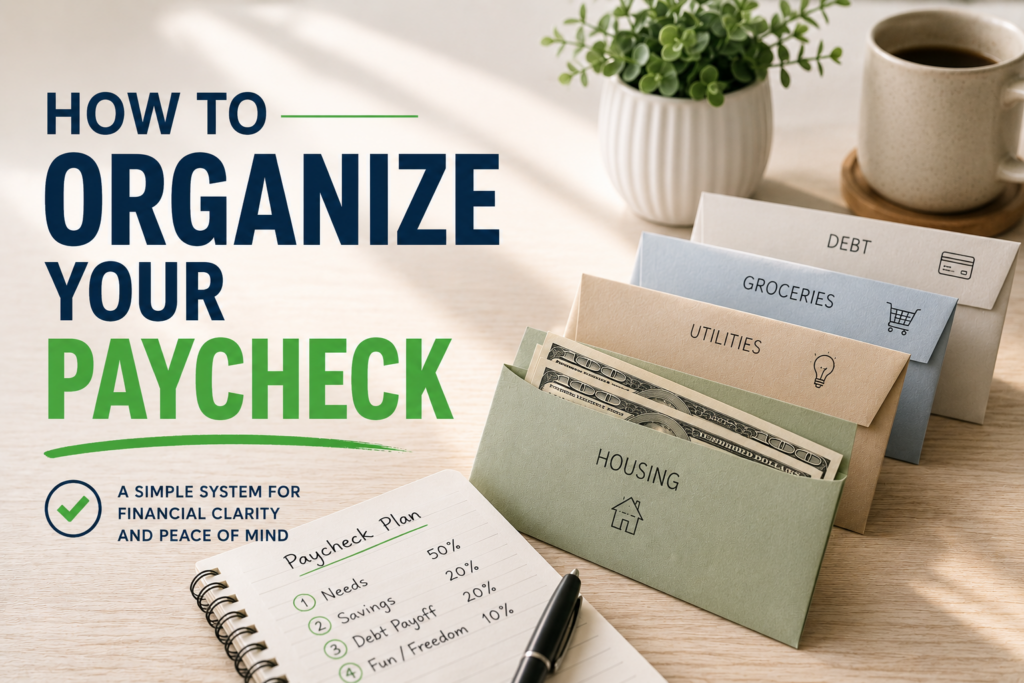
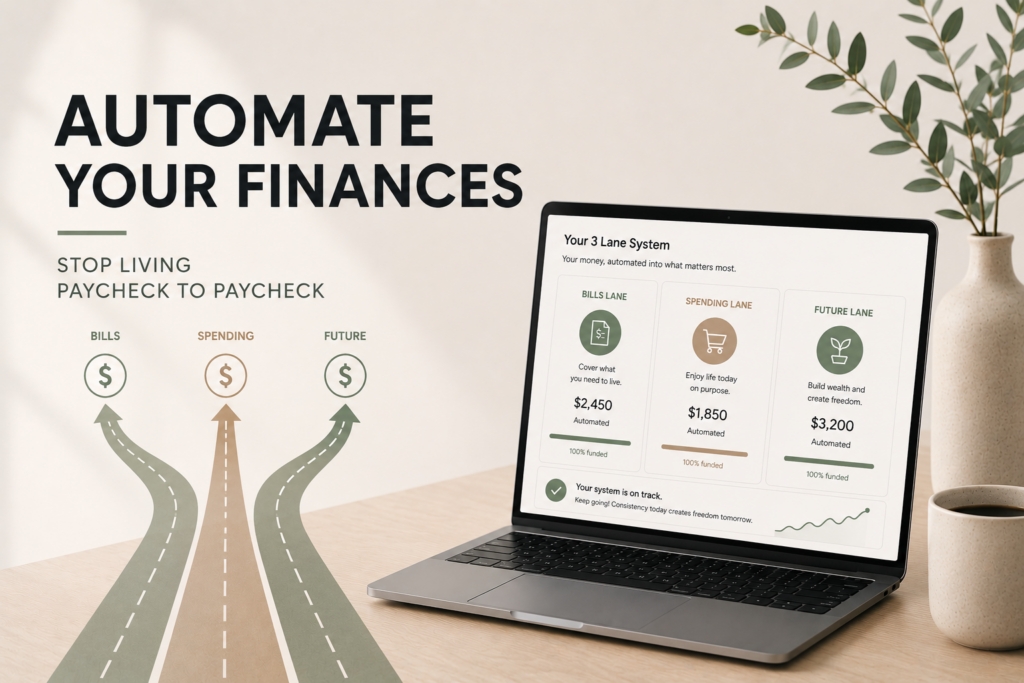
I started separating and categorizing our money before it got spent. Bill money had its own place. Everyday spending had its own place. Money for savings, paying off debt, emergencies, and finally getting ahead financially stopped getting swallowed up by random life expenses before we even had a chance to think about it.
It did not fix everything overnight, but it was the first thing that made life feel manageable again.
And honestly, that is what makes this system different from traditional budgeting.
Most budgets focus on tracking money after it is already gone. This system focuses on organizing money before life gets a chance to scatter it in twenty different directions.
That changes the emotional experience of money more than people realize.
Because when all your money sits in one place, your brain starts treating every dollar like emergency money.
That is the part nobody talks about enough.
When everything is mixed together, groceries feel connected to utility bills. Buying something small for yourself feels connected to debt. Every purchase starts carrying emotional weight because part of your brain is trying to protect fifteen other responsibilities at the same time.
There is no separation or clarity. Just constant financial pressure quietly running in the background of your life.
Once I started organizing our money differently, some of that pressure finally started lifting. Not because we suddenly became rich, and not because we became perfect with money. But because things finally had a place before life started pulling from them.
That is why the Money Lane System works so well for people who feel overwhelmed by traditional budgeting. It is not built around perfection. It is built around helping normal people stay in control of their finances during real life.
It finally fit the kind of busy, messy family life we were actually living every day. The kind where somebody suddenly needs twenty dollars for school tomorrow. The kind where the puppy pees on the floor again five minutes after being outside. The kind where everybody has a terrible day and you order pizza because you simply cannot deal with one more thing.
A lot of people think financial control comes from tracking every dollar perfectly. I honestly do not think that is true anymore. I think financial control comes from reducing chaos and creating enough organization that your brain can finally stop treating every expense like a potential crisis.
That is why posts like Why Budgeting Fails For Most People (And What Works Better) and How To Organize Your Finances Without A Budget Spreadsheet resonate with so many overwhelmed families. Most people do not need more complicated financial routines. They need a simple money system they can actually maintain when life gets hard.
And once I realized that, everything started changing slowly.
I stopped obsessively checking the bank account every other day. I stopped doing midnight money transfers trying to time everything perfectly before bills cleared. I stopped carrying financial stress into every part of my day. Most importantly, I stopped feeling embarrassed and ashamed every time money came up.
I think a lot of women quietly carry that feeling. Not full financial disaster, just constant financial tension. Feeling like you are always one step behind, always mentally calculating, always trying to stay ahead of the next problem before it hits. That kind of pressure wears you down over time, especially when you are carrying the mental load of an entire household too.
That is why I believe so strongly in having a simple money management system that reduces pressure instead of creating more of it.
Life is unpredictable. There will always be unexpected expenses, stressful weeks, broken appliances, school costs, holidays, and seasons where you are emotionally drained and just trying to get through the week. Without some kind of structure holding your money in place, every one of those things pulls your finances in a different direction.
That is exactly why so many people stay stuck living paycheck to paycheck even while working incredibly hard. How To Stop Living Paycheck To Paycheck Without Extreme Budgeting explains this really well. The issue is often not effort. It is that money has no structure holding it in place.
If you are feeling overwhelmed and do not even know where to start, you can start right away with the free printable 10-Minute Paycheck Plan. It is simple, realistic, and designed to help you take that first step toward organize your money before your paycheck disappears into everyday life.
The goal was never perfection or tracking every tiny purchase forever. I just wanted enough organization that money stopped feeling chaotic all the time.
I did not create this because I became some perfect finance person. I created it because I was a tired mom trying to make money feel manageable again.
And if you are sitting there feeling financially overwhelmed, constantly behind, or exhausted from trying to organize everything in your head, I want you to know this: you are probably not bad with money. You are probably carrying too much at once. And once I understood that myself, I stopped blaming myself quite so much.