The House I Couldn’t Afford to Buy
I hadn’t meant to buy a house.
At the time, I was living on a disability pension and barely getting by. Homeownership wasn’t part of the plan because it didn’t seem remotely realistic. Then my landlord approached me with an opportunity I never expected.
She offered to sell me the house. Not through some complicated financing arrangement. She would hold the mortgage herself because there was no chance I would be approved by a bank. She told me I could put down whatever down payment I could afford.
The problem was that I couldn’t afford anything.
My parents paid the lawyer fees, and somehow I managed to scrape together a $100 down payment.
Yes, you read that right.
There are no zeros missing.
One hundred dollars.
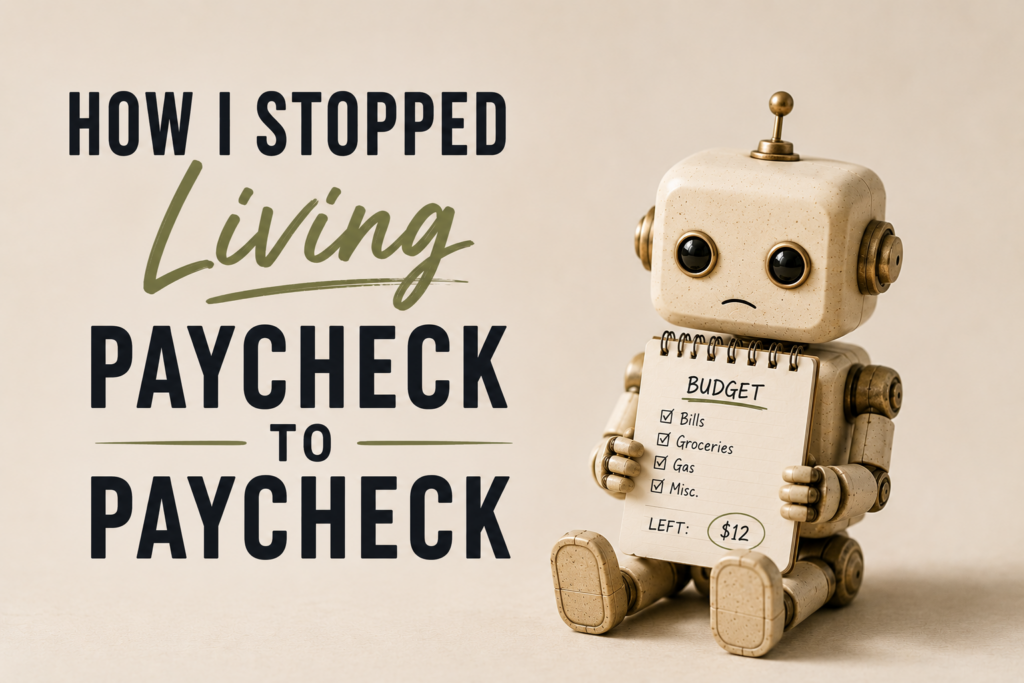
When everything was finalized and the house was mine, I checked my bank account and discovered I had $12 left.
Most people probably thought I was crazy. Looking back, maybe they weren’t entirely wrong. I was poor. I didn’t own a car. I was living on a disability pension. I was five months pregnant. And now I owned a house.
But there was another side to the story.
I wasn’t buying the house because I thought it would make me rich. I bought it because I wanted a home for my child. There was a backyard. There was a park nearby. For the first time, I could picture raising a child somewhere stable instead of wondering where we might end up next. I also understood something that many people around me didn’t. Real estate had the potential to change my future. Even back then, I knew that if I played my cards right, took care of the property, and held onto it long enough, I would likely come out ahead.
I wasn’t thinking about becoming wealthy. I was thinking about building something. I was thinking about creating a foundation I could eventually build upon.
The opportunity felt too important to pass up, but what should have felt exciting mostly felt terrifying. I knew houses came with responsibilities. Furnaces broke. Roofs leaked. Pipes froze. And unlike renting, there wasn’t a landlord to call anymore. Every problem would be mine to solve.
I knew I couldn’t fail.
Why Saving My First $1,000 Became an Obsession
Saving my first emergency fund wasn’t about building wealth, and it certainly wasn’t about retirement. It wasn’t because some financial expert told me I needed an emergency fund. I was trying to protect the house.
More than that, I wasn’t going to be the person who screwed up the one opportunity my child might have to grow up in a real house with a backyard and a park nearby. The house represented stability, security, and a future I had never imagined was possible.
The number wasn’t always exactly $1,000. In the beginning, I simply knew I needed money set aside for when life happened. A thousand dollars felt like the bare minimum. It was the first milestone I was aiming for and the first amount that felt meaningful.
I wasn’t trying to get rich. I was trying to put something between my family and catastrophe.
If you’re still trying to build your first emergency fund, you might also find How Much Should You Have in an Emergency Fund? helpful. One thousand dollars was my first target, but it wasn’t my final target.
Looking back, that first emergency fund taught me lessons that would shape the rest of my financial life. It taught me that money needs priorities. It taught me that the future rarely gets a turn unless you deliberately give it one. It taught me that waiting to see what’s left at the end of the month rarely works because there usually isn’t anything left.
Most importantly, it taught me that money needs to be organized before life gets its hands on it. Years later, those lessons became the foundation of everything I’ve put into the Money Lane System.
The Real Way I Saved My First $1,000
When people search for ways to save their first $1,000, they’re often looking for tricks, hacks, or shortcuts. I didn’t have any.
What I had was a reason.
Every dollar already had somewhere it could go. The only way I could save was by deciding that my emergency fund mattered more than something else. Once I made that decision, every spending choice became easier because I already knew where extra money belonged.
Tax refunds went into the fund. Unexpected money went into the fund. Money saved from heating with wood went into the fund. Money saved from cooking at home went into the fund. Whenever I managed to spend less than I expected, the difference went into the fund.
I stopped asking myself what to do with extra money because I had already made that decision.
One of the biggest mistakes I made early on was trying to save, pay debt, and tackle every financial goal at the same time. That’s why I eventually learned the importance of focusing on one priority at a time, which I discuss in Why Most People Never Finish Financial Goals.
Looking back, there were a handful of things that helped me reach that first $1,000 emergency fund. I chose one goal instead of trying to solve every financial problem at once. I directed every bit of extra money toward that goal. I learned skills that reduced my expenses. I accepted temporary sacrifices because I had something worth protecting. And every time life knocked me backwards, I rebuilt instead of giving up.
None of those things were complicated, but they worked.
The Sacrifices That Created My Emergency Fund
I saved my first $1,000 through sacrifice, but the sacrifices didn’t all happen at once.
That’s something a lot of financial advice gets wrong. It makes it sound as though one day you wake up and completely change your life. My experience was much messier than that. Most of the things that helped me save money were skills and habits I learned gradually over time.
One of the biggest was heating our home with wood because it was cheaper. That sounds simple enough until you’re actually living it.
When my baby was born, there were nights when I would get up to feed the baby, go back to sleep, get up again to stoke the fire so the house wouldn’t be freezing by morning, go back to bed, and then get up again to feed the baby. Stoking the fire isn’t nearly as romantic as people imagine. It’s especially hard in January when the temperature drops below zero and you’re living in an old house with barely any insulation. The fire wasn’t optional. If you wanted the house to be warm in the morning, you got out of bed and fed it.
I also learned how to cook from scratch. Not overnight. At first I wasn’t very good at it. Over time I got better. The same thing happened with gardening. I started because I wanted to save money on food, but it took years to become reasonably successful at it.
In fact, thirty years later, I’m still trying to perfect both of those skills.
Learning to save money is often less about earning more and more about reducing the gap between what comes in and what goes out. If you’re struggling with that side of the equation, read 50 Ways to Save Money When You’re Broke.
Saving money wasn’t a single decision. It was a collection of small skills that got better with practice. Neither cooking nor gardening was a magic solution. They were simply ways to spend a little less money and become a little more self-reliant over time.
Learning to Spend Effort Instead of Money
Looking back, one of the biggest lessons I learned was that whenever I had a choice between spending money and spending effort, I often chose effort.
Sometimes that effort meant learning a new skill. Sometimes it meant cooking from scratch, gardening, fixing something myself, or finding a way to make do with what I already had. But sometimes the effort was much less practical and much more emotional.
Sometimes the effort was simply saying no.
No to convenience. No to comfort. No to the thing that would make life easier today but make life harder tomorrow.
Those decisions aren’t exciting, and they’re often invisible to everyone except the person making them. Over time, though, those small decisions add up.
I realize this probably sounds like one of those pull-yourself-up-by-your-bootstraps stories. Maybe it is.
But I’m not telling it because I think everyone can solve every financial problem through hard work alone. Life doesn’t work that way. Some situations are genuinely unfair, and some obstacles are bigger than determination.
I’m telling it because it’s what actually happened to me. There wasn’t a secret shortcut. I made sacrifices, learned skills, made mistakes, rebuilt savings when emergencies wiped them out, and slowly improved my situation over time.
That’s not a motivational speech.
It’s simply the truth.
Finding Free Ways to Build a Good Life
As my child got older, I learned there were plenty of ways to create good memories without spending much money.
We went to the beach. We went hiking. We explored parks. We packed lunches instead of buying them. We found free community events whenever we could.
Saving money didn’t mean stopping life. It meant learning that some of the best parts of life were free.
Looking back, many of those simple days became the memories that mattered most. When people think about saving money, they often imagine deprivation. What I discovered was that some of our happiest moments cost almost nothing.
Why Most Emergency Funds Don’t Stay Full
One thing nobody tells you about emergency funds is that they aren’t meant to sit there untouched forever.
My first thousand came and went many times. A repair would come up. An unexpected bill would arrive. Something would break. The money would get used, and then I would build it back up again.
That’s what emergency funds are for.
Using the money wasn’t failure. The real victory was knowing I could rebuild it.
But while I was building it, I protected it fiercely. I didn’t dip into the money to order pizza, buy something pretty, or make myself feel better after a hard week. I needed that money standing guard over the future I was trying to build.
Every dollar in that account represented security. It represented a mortgage payment that wouldn’t be missed, a repair that wouldn’t become a crisis, and a little more distance between my family and financial disaster.
If your emergency fund keeps disappearing, don’t assume you’re failing. That’s often what emergency funds are supposed to do. The key is rebuilding them. I talk more about that in What To Do After You Use Your Emergency Fund.
The Money Lesson That Changed Everything
When I was younger, I treated all of my money as one giant pile. Bills came out of it. Groceries came out of it. Emergencies came out of it. Savings came out of it. Everything was competing for the same dollars, and the future almost always lost because today’s problems felt more urgent. The ideas that eventually became the Three Lane System grew out of this realization. If you’d like to learn the complete approach, you can read more about it in The Three Lane System.
It took me years to realize that the issue wasn’t simply a lack of money. The bigger problem was that my money had no separation and no clear priorities. Every dollar was trying to do ten jobs at once. As long as everything lived together in one account, today’s needs would always overpower tomorrow’s goals.
That realization eventually became the foundation of the Money Lane System. The idea is simple: separate money by purpose before life spends it for you. Money for bills needs a job. Money for spending needs a job. Money for debt needs a job. Money for the future needs a job.
That’s ultimately what the Money Lane System teaches. It helps people manage today’s obligations, pay down debt, and build a better future without feeling like every dollar is being stretched beyond its limits. The same principles that helped me save my first $1,000 eventually helped me eliminate debt, build savings, and move from that first little house to the fourth house I own today.
Separating money by purpose is also what makes it possible to pay down debt and build savings at the same time. That’s a concept I explore further in Move Your Money Forward.
What Happened After the First $1,000
My first $1,000 didn’t change my life overnight.
But it changed the direction of my life.
Looking back, I thought I was saving my first $1,000. What I was really doing was learning how to manage money in a completely different way. The emergency fund was simply the first place I practiced that skill.
Over time, things improved. There were better years. Income increased. The financial pressure eased.
That first thousand eventually became five thousand.
Then more.
The old house that had once terrified me was eventually paid off. Later, I sold it and used the profit to buy a better house. Then another. Today, I’m living in the fourth house I’ve owned.
None of that happened because I found a perfect budget. It happened because I learned how to prioritize, how to sacrifice when necessary, and how to give my future a turn.
The First $1,000 Is About More Than Money
If you’re trying to save your first $1,000 right now, don’t start by asking how to save more money.
Start by asking why it matters.
What are you protecting? What future are you trying to build? What problem are you trying to prevent?
Once you have a clear answer, prioritizing becomes easier and sacrifice becomes meaningful. That’s how I saved my first $1,000. Not through a spreadsheet, a perfect budget, or financial tricks, but through prioritization, sacrifice, and a determination not to lose the opportunity that had been placed in front of me.
And those lessons eventually became the foundation of the Money Lane System itself.