A lot of financial stress comes from something painfully simple: money doesn’t even look like money anymore.
It’s a line of code in a computer somewhere.
You tap your phone, swipe a debit card, click “confirm purchase,” and something shows up at your door two days later. No physical exchange. No moment where you actually watch money leave your hands. No emotional pause between wanting something and buying it.
That changes people more than they realize.
Spending used to feel tangible. Now it feels almost invisible until suddenly your account balance looks awful and you’re sitting there wondering where the hell your paycheck even went. And usually the answer isn’t dramatic. It wasn’t luxury handbags or reckless shopping sprees. It was groceries that somehow cost way more than expected. A couple exhausted takeout nights because you were too drained to cook. Auto-renewals you forgot about. Gas. School stuff. One rough week where spending became emotional instead of intentional.
Have you noticed how spending barely feels real anymore until you check your balance afterward?
That disconnect is one reason so many people struggle with money organization now. It’s also why a lot of traditional budgets quietly fail over time. Trying to track every dollar mentally gets exhausting fast, especially when life already feels heavy. If that sounds familiar, read Why Budgets Don’t Work (And You’re Probably Still Broke).
Financial stress also digs much deeper than numbers on a screen. It changes the way you move through everyday life. Not being able to afford the cold medicine you actually need, so you just suffer through it longer than necessary. Feeling a knot in your stomach every time the phone rings because maybe it’s collections. Getting anxious opening the mailbox. Quietly deciding not to go to the high school reunion because you don’t want people asking how life’s going financially.
After a while, money stops feeling practical.
It starts feeling personal.
That’s why I don’t think budgeting is the main issue for a lot of people. Organization is. Those are two completely different things.
I used to think financial control meant stricter budgets, tighter rules, and tracking every purchase perfectly. I’d restart budgets constantly, convinced the next app, spreadsheet, or budgeting method would finally fix me. But the real issue was that my money had no structure. Everything lived in one account together: bills, groceries, spending, emergencies, future goals, and money that was already mentally spent before I even got paid.
So every purchase carried uncertainty. Every grocery trip turned into mental math. Every debit card swipe came with that quiet little panic:
“I think there’s enough in there…”
That’s not a budgeting problem. That’s disorganized money.
A lot of financial anxiety comes from not having a clear money setup in the first place. That’s why learning What To Do Every Payday Before Your Money Disappears can feel completely different than traditional budgeting advice. You can also read How to Organize Your Paycheck So Bills Stop Taking Over.
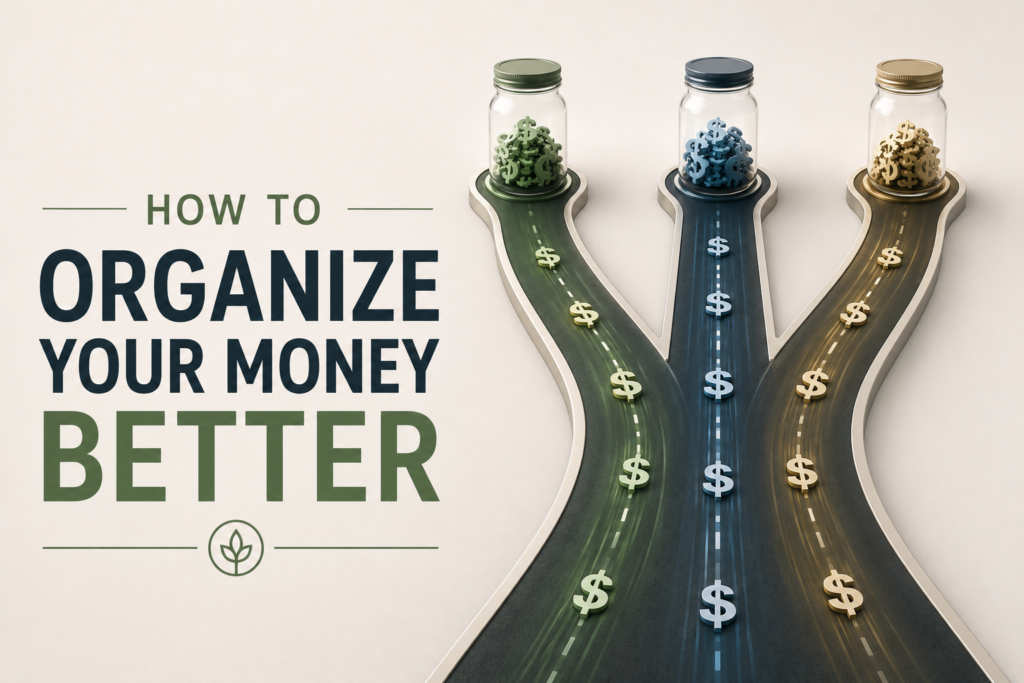
The basic Money Lane idea is simple: stop keeping your money in one giant pile.
The Bills Lane holds the money that keeps your life functioning — housing, utilities, insurance, recurring obligations, and the stuff that creates immediate problems when it falls behind. The Spending Lane covers everyday life: groceries, gas, coffee, school expenses, and all the regular spending that quietly absorbs everything when there’s no separation. Then there’s the Future Lane, which protects future-you from panic. That’s emergency savings, debt payoff, getting ahead on bills, breathing room, and financial stability instead of constantly recovering from the last financial hit.
The Money Lane System is built around separating money before it gets psychologically absorbed into everyday life. The Future Lane matters because if money stays fully available to the present, the present usually consumes it.
That’s also why payday habits matter more than motivation long term. Financial stability usually comes from what happens immediately after the paycheck arrives, not from trying to “be better” later in the month.
Here’s the hard truth nobody likes hearing: you do have to take responsibility for your financial life. Nobody is coming to magically organize your money for you. At some point, you have to look honestly at where the leaks are, where emotional spending happens, where convenience took over, where avoidance got expensive, and where “I’ll deal with it later” quietly became a lifestyle.
But there’s another truth sitting beside that one.
Modern life is practically engineered to make people spend constantly. Inflation is brutal. Convenience is addictive. Everybody’s exhausted. Delivery apps remove friction from spending. Social media quietly pressures people to consume nonstop while making it look normal. Entire industries profit from people staying disconnected from their money.
That doesn’t remove personal responsibility.
But it does explain why financial life feels mentally exhausting now in a way that’s hard to describe unless you’ve lived it.
Financial avoidance gets expensive fast too. Overdraft fees, forgotten subscriptions, late fees, impulse spending, account chaos — it all builds quietly in the background. That’s why financial organization matters so much more than people think.
Honestly, some people would probably benefit from temporarily switching to cash for certain spending categories. It sounds old-school and inconvenient, but cash creates visibility again. You physically watch it leave your hand. Your brain registers it differently. Debit cards don’t create the same signal. The spending barely feels real in the moment, then later you check your balance and think:
“Aw crap.”
Cash forces awareness back into the process. Not because cash is magical, but because visibility matters. How many purchases this month do you even fully remember making?
The first thing that actually helped me was not stricter budgeting. It was finally organizing my money so bills, spending, and future money stopped fighting each other constantly. That’s the foundation behind the Money Lane System and the beginner-friendly (and free) 10-Minute Paycheck Plan — creating enough structure that money stops feeling chaotic all the time.
Financial chaos usually doesn’t happen in one catastrophic moment. It happens slowly. Swipe by swipe. Subscription by subscription. Stress purchase by stress purchase. Month by month. A lot of people are not overspending because they’re greedy. They’re overspending because they’re exhausted, disconnected from where their money is actually going, and trying to survive inside a culture built around convenience and consumption.
That’s why organization matters more than budgeting.
Disorganized money creates disorganized emotions. Panic. Avoidance. Shame. Constant mental noise. But when money finally has structure — real structure — something starts changing internally too. You breathe differently. You sleep differently. You stop feeling dread every time your phone buzzes or the mailbox opens.
That’s usually where financial change actually begins.